
[4 Scenarios] How to Prevent Gear Damage Using Durable Boat Rod Holders?

Table of Contents
- Preventing Rod Blank Scraping and Vibration Wear in Boat Rod Holders
- Eliminating Reel-to-Reel Impact During Transit
- Counteracting the Degradation of Materials in Inexpensive Plastics for Marine Rod Holders
- Stopping Corrosion and Dampness Around Flush-Mounted Rod Holders
- Selection of Materials Based on Performance of a Boat Rod Holder
Investing in fishing equipment is a big commitment; however, many anglers fail to realize that their gear is frequently harmed by incorrect storage and inferior hardware. Whether your rods are stowed securely in dedicated boat rod holders or deployed for active trolling, utilizing subpar mounting equipment can cause extensive damage—including cracked blanks, broken grips, and scuffed reel bodies. Choosing durable boat rod holders is the single most effective way to ensure your fishing gear stays in prime condition season after season.
Preventing Rod Blank Scraping and Vibration Wear in Boat Rod Holders
When rods are loosely fitted inside oversized rocket launchers or standard boat rod holders during high-speed transits through choppy water, constant vibrations cause severe friction. The rods continuously rub against rigid metal or hard plastic edges, progressively wearing down carbon fiber blanks, graphite materials, and EVA foam grips.
- Solution 1: Line your existing boat rod holders with foam pipe insulation, heavy-duty rubber gaskets, or modified pool noodles to create an impact-absorbing buffer.
- Solution 2: Upgrade to adjustable clamp-style or locking gimbal boat rod holders, which lock rods securely in place to eliminate micro-vibrations—perfect for heavy Saltwater Jigging Rod Setup configurations.
Eliminating Reel-to-Reel Impact During Transit
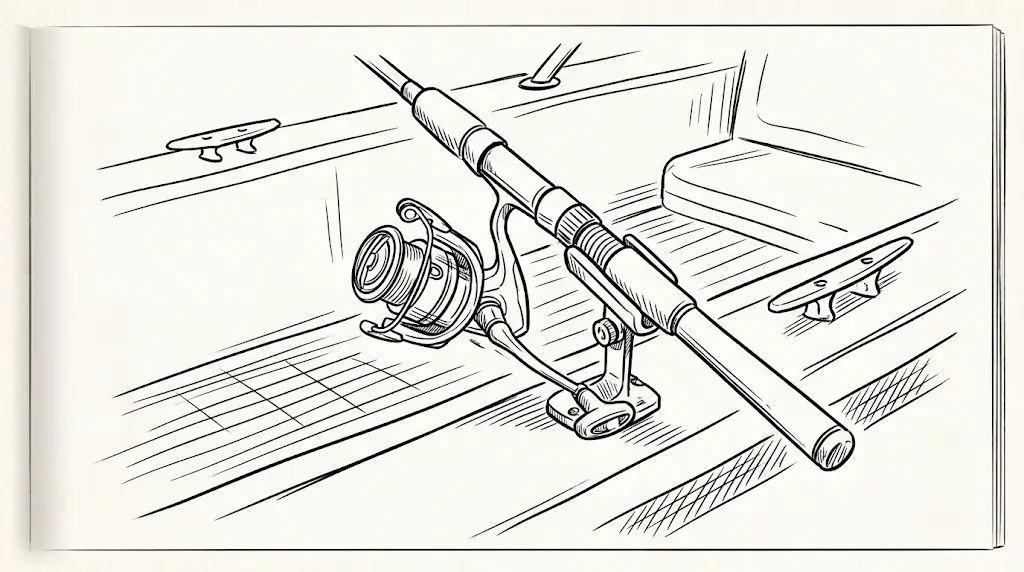
Rods clustered too closely together within cramped vertical boat rod holders frequently slam into adjacent gear or metallic vessel structures while underway. This repeated impact scratches reel bodies, mars anodized finishes, and misaligns internal bail systems.
- Solution 1: Stagger installation heights and angles across your boat rod holders by combining various mount angles (such as 0°, 15°, and 30° flush mounts) with gunwale tracks or overhead launchers.
- Solution 2: Fit reels with neoprene covers and protective wraps during trailering and offshore runs to safeguard delicate Protect Power Handle assemblies from sudden impacts.
Counteracting the Degradation of Materials in Inexpensive Plastics for Marine Rod Holders
Budget-friendly plastic or unbranded composite boat rod holders degrade rapidly when exposed to intense UV radiation. Sunlight breaks down polymer chains, causing structural brittleness that can result in catastrophic failure under heavy wave loads or aggressive fish strikes.
- Solution 1: Avoid low-grade commercial plastics and instead select engineered materials such as UV-stabilized polyurethane, reinforced nylon, or marine-grade stainless steel.
- Solution 2: Routinely treat composite boat rod holders with marine-grade UV protectants to prolong their lifespan under direct sunlight.
Stopping Corrosion and Dampness Around Flush-Mounted Rod Holders
Trapped moisture, accumulated salt residue, and poor sealant application around mounting fasteners create ideal conditions for crevice corrosion and wood rot within surrounding fiberglass structures.
- Solution 1: Equip your vessel with premium stainless hardware and apply marine-grade sealant generously around all screw holes and cutouts.
- Solution 2: Connect drainage tubing to flush-mount boat rod holders to evacuate water quickly, and thoroughly rinse all gear with fresh water after saltwater trips.
Selection of Materials Based on Performance of a Boat Rod Holder
Choosing the right material is vital for long-term hardware performance. The table below compares the durability metrics of various boat rod holders available on the market.
| Material | Corrosion Resistance | UV Resistance | Average Lifespan (Salt Water/Moored) | Impact Resistance | Recommendations for Use |
|---|---|---|---|---|---|
| Cheap Plastic | High (Not a metal) | Poor (Breaks after 1-2 seasons) | 1-2 years | Low (Cracks under heavy strikes) | Just for light freshwater use; no offshore applications needed. |
| Composite Material (Nylon/PU) | High (Not a metal) | High (Engineered UV inhibitors used) | 3-7 years | Moderate to High | For plastic kayaks, small skiffs, and gunwales in freshwater. |
| 304 Stainless Steel | Moderate to High (Pitting may happen) | Very good (Metal is used) | 3-7 years (If coated and maintained) | High | For coastal and moderate-salt trolling. |
| 316 Stainless Steel | Maximum (Very good for chloride corrosion) | Very good (Metal is used) | 10+ years (Lifetime while rinsing in fresh water) | Maximum (Heavy use in offshore fishing) | For heavy offshore use, including boltless rod holders and rocket launchers. |