.svg)


Largemouth vs Spotted Bass—these are two of the most popular, hard-fighting freshwater game fish in North America. While they frequently share the same clear lake systems and can look incredibly identical at first glance on a chaotic deck, they are completely distinct species with different growth rates and structural habits. Misidentifying them is a common mistake for beginner anglers.
To help you accurately log your catch and stay strictly compliant with local wildlife regulations, there are several key physical characteristics you can check. In this visual guide, we’ll break down the anatomical blueprints to help you identify these species with total confidence.
The 6 Key Physical Identification Milestones
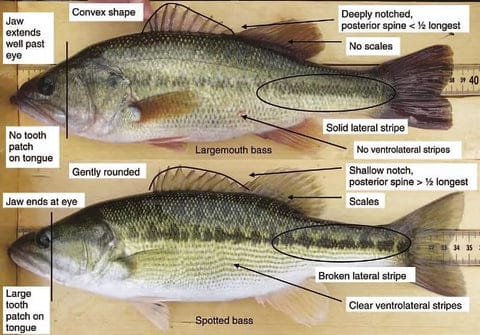
When examining your fish, go through these 6 specific anatomical milestones from mouth to tail to make an absolute positive identification:
| Anatomical Feature | Largemouth Bass (Micropterus salmoides) | Spotted Bass (Micropterus henshalli) |
|---|---|---|
| 1. Jaw Length | The closed lower jaw extends well past the back edge of the eye. | The lower jaw aligns perfectly or ends right at the back edge of the eye. |
| 2. Tongue Texture | Completely smooth. No tooth patch on the center of the tongue. | Rough. Features a distinct, rough sandpaper-like tooth patch on the tongue. |
| 3. Lateral Patterns | A broad, relatively solid dark horizontal stripe running head to tail. | A highly broken, jagged lateral stripe with separate dark spots on lower belly scales. |
| 4. Cheek Scales | Cheek scales are large, uniform in size with the rest of the body scales. | Cheek scales are significantly smaller and finer than the primary body scales. |
| 5. Dorsal Fin Connection | Deeply Notched. The spiny and soft sections appear nearly separate. | Clearly Connected. Smooth, continuous flow between spiny and soft sections. |
| 6. Primary Coloration | Lighter greenish-yellow or green-brown hue with cleaner white bellies. | Darker olive-green hue with heavy, prominent dark spotting below the lateral line. |
Behavioral & Habitat Discrepancies
Beyond external biology, these two apex predators occupy different ecological niches in a reservoir:
- Maximum Size Potential: Largemouth bass grow significantly larger and heavier than spotted bass. If your catch pushes past the 6-pound mark, it is almost statistically guaranteed to be a largemouth.
- Habitat Choice: Largemouth bass thrive in shallow, murky waters around heavy vegetation, standing timber, and boat docks. Conversely, spotted bass prefer cooler, deeper, and crystal-clear water regimes, often suspending over deep rocky points, gravel flats, or river channels.
- Fighting Characteristics: When hooked, a largemouth is notoriously known for immediate explosive surface-breaking jumps to shake the lure. A spotted bass tends to stay down, executing a brutal, head-shaking bulldog fight toward deep water, utilizing their compact torque.
Conclusion: Master Your Presentation
By carefully cross-checking the jaw line extensions, running a finger along the tongue for a tooth patch, and analyzing the dorsal fin depth, you can move forward with absolute confidence in tracking your bass species. Knowing whether you are working a population of largemouths or deep-dwelling spotteds allows you to dial in your mapping and presentation tactics perfectly.
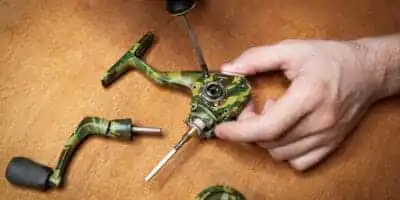
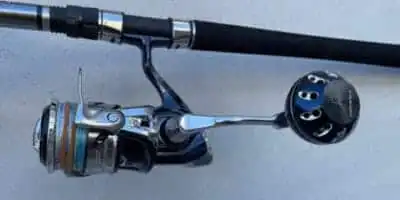
• For Finicky Spotted Bass (Finesse Tactics): When you are drop-shotted a tiny worm over a 30-foot deep rocky hump or working sensitive Ned rigs, micro-sensitivity is everything. Upgrade your spinning reel with our specialized Gomexus Custom Spinning Handles or ultra-light Ergonomic Reel Knobs to detect the slinkiest, deep-water ticks.
• For Heavy Cover Largemouths (Power Fishing): If you are flipping jigs, pitching Texas rigs, or punching heavy tungsten weights through matted grass to yank monster largemouths out of dense cover, you need brute winching torque. Eliminate handle flex completely with the tournament-grade Gomexus BDH-TPE24 Aluminum Baitcasting Handle. Featuring a heavy-duty extended aluminum arm and non-slip, slime-resistant TPE power knobs, it gives you the ultimate cranking leverage to turn a trophy’s head in thick grass and win the battle.