.svg)
Fishing Tips
-

⚡ Quick Guide: Lure Color Science
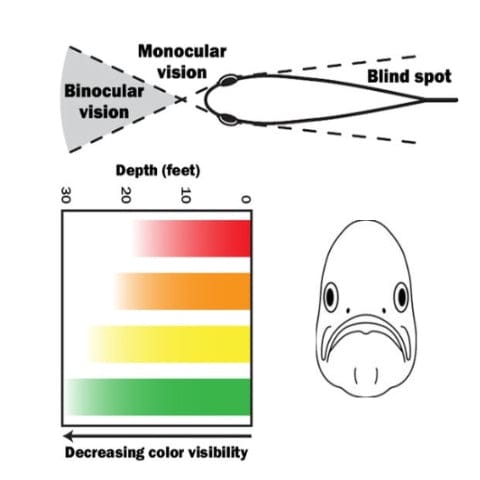
- Depth Matters: Red light disappears first (below 15–20 ft), turning gray/black. Blue and green wavelengths penetrate the deepest.
- Water Clarity Rule: Use bright, high-contrast colors (Chartreuse, Hot Pink, Firetiger) in murky water; use natural tones (Pumpkin, Silver, Olive) in clear water.
- Fluorescent & UV Advantage: UV and fluorescent lures react to invisible light, making them vital for overcast days, murky water, or deep structure.
Understanding lure color science is one of the most effective ways to increase your strike rate on the water. While lure action and depth control are critical, how a fish perceives color under varying water conditions often dictates whether they commit to a strike or turn away. In this guide, we dive into the physics of underwater light penetration, fish vision mechanics, and how to select the perfect lure color for any environment.
How Light Penetrates Water: The Physics of Underwater Color
When light enters the water column, it undergoes wavelength absorption. Water acts as a natural filter, stripping away long-wavelength colors first as depth increases.
Color Spectrum Absorption Depth Underwater Appearance at Depth Red 15 – 20 feet Fades rapidly into muted dark gray or black. Orange & Yellow 30 – 45 feet Loses brightness, shifting toward neutral brownish tones. Green 65 – 80 feet Retains vivid contrast in both clear and algae-stained water. Blue & Violet 100+ feet Penetrates deepest; remains highly visible in deep saltwater. 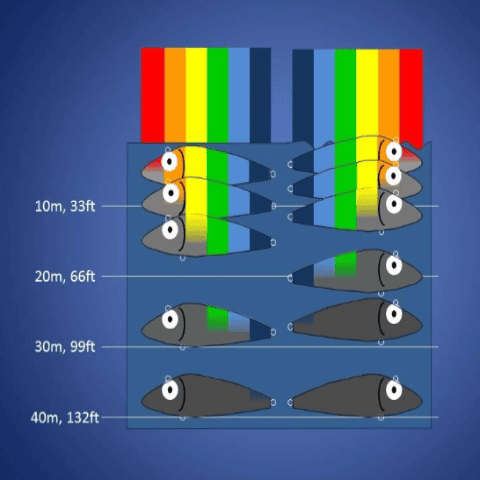
How Fish Perceive Color: Rods, Cones, and Contrast
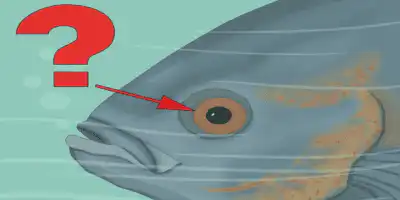
According to research on fish retinal vision, predatory species like Large Mouth Bass, Walleye, and Inshore Redfish possess specialized cone cells in their eyes optimized for their native habitats.
🌊 Clear Water Scenarios
In high-visibility water, game fish closely inspect prey. Opt for natural baitfish match-ups like translucent silver, watermelon, green pumpkin, and subtle chrome finish.
🤎 Murky / Stained Water
Low clarity reduces visual range. Use high-contrast or fluorescent colors like Chartreuse, Firetiger, Solid Black, and Hot Pink to emit a sharp silhouette.
The Power of Fluorescent and UV Lures Underwater
Fluorescent colors behave differently than standard painted pigments. They absorb invisible ultraviolet (UV) light waves and re-emit them as visible long-wavelength light. This chemical reaction allows fluorescent lures to glow brightly even under low-light overcast conditions, murky water columns, or deep structure.
 World's First CNC Metal Glide Bait
Gomexus Cyberbait 240 Metal Glide Bait
Combine advanced lure color science with extreme physical attraction. The Cyberbait 240 is built with X-Stretch technology and a CNC metal frame that emits continuous acoustic sound waves underwater to provoke aggressive feeding strikes from trophy fish.
- X-Stretch Life-Like Action: 240mm (9.45") / 4.3oz floating glide bait with interchangeable lips and replacement tails.
- Acoustic Metal Sound Waves: Emits underwater resonance to trigger strikes in murky water or low-light conditions.
- Heavy-Duty Terminal Tackle: Pre-equipped with ultra-sharp, anti-rust BKK treble hooks for maximum hook-up rates.
- Freshwater & Saltwater Versatility: Designed for long-distance casting and high-drag pressure.
Practical Rules for Lure Color Selection
When rigging up on the boat deck or shoreline, follow this simple 3-step decision matrix based on lure color science:
- Sunny Days & Clear Water: Natural translucent patterns (Silver Shad, Ghost Minnow, Watermelon).
- Overcast Days & Stained Water: Solid or reflective metallic patterns (Gold, Chrome, Chartreuse Lime).
- Low Light / Night Fishing: Solid Dark Colors (Black, Dark Purple) that create a distinct, sharp contrast silhouette against the surface sky.
Conclusion
Mastering lure color science eliminates the guesswork from your tackle box. By matching your color selection to water depth, clarity, and light conditions, you present a lure that game fish can easily locate and strike. Keep a balanced palette of natural and high-contrast lures ready, adapt as weather shifts, and fish with total confidence!
-
⚡ Key Takeaways
- Mechanical Advantage: Upgrading to an extended baitcaster handle (98mm+) increases cranking torque without altering factory gear ratios.
- Less Physical Strain: Longer leverage reduces hand fatigue during long 12-hour tournament days and heavy retrieves.
- Heavy Lure Efficiency: Essential for high-resistance lures like deep-diving crankbaits, swimbaits, and punching thick cover.
- Easy Upgrade: Direct plug-and-play fitment for major brands like Shimano, Daiwa, Abu Garcia, and Lew's.
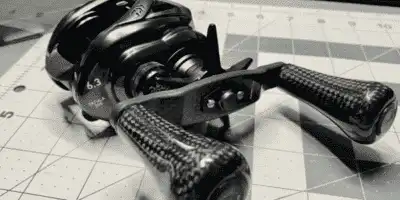
An extended baitcaster handle is one of the most effective reel upgrades an angler can make to dramatically boost cranking leverage on the water. While angler attention often focuses on rod action or line weight, one seemingly subtle component dictates your physical control over stubborn game fish. Choosing a custom extended baitcaster handle allows you to winch big bass out of heavy cover, reduce wrist fatigue, and maintain a seamless cadence with high-resistance lures.
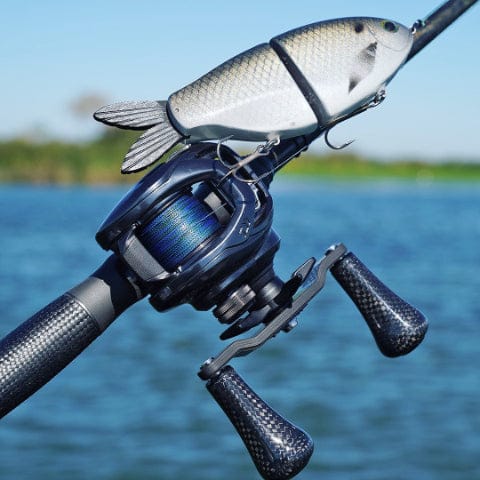
The Physics Behind an Extended Baitcaster Handle
Why do professional tournament anglers on the Bassmaster Elite Series swap their factory 80mm or 85mm handles for 98mm+ extended setups? It all comes down to mechanical leverage.
1. Increased Cranking Torque Without Changing Gear Ratios
Extending the length of your reel arm doesn't alter the internal gear ratio or Inches Per Turn (IPT), but it drastically changes the physical effort required to turn the spool under load. The physical torque ($\tau = F \times r$) increases directly with handle length. A longer distance ($r$) from the center pivot means your hand exerts significantly less physical force ($F$) to retrieve heavy, high-resistance lures.
2. Superior Control and Reduced Hand Fatigue
Factory stock handles can feel cramped, especially for anglers with larger hands or those wearing cold-weather fishing gloves. Installing an extended baitcaster handle paired with ergonomic round or slim carbon knobs provides a more natural palm placement. This wider winding arc minimizes wrist strain during long fishing sessions and allows for smoother, more controlled slow-rolling retrieves.
Stock Handle vs. Extended Baitcaster Handle Comparison
Feature Stock Handle (80mm - 85mm) Extended Baitcaster Handle (98mm - 120mm) Cranking Torque Standard (Requires more physical effort) Maximized (Easier to turn under heavy drag) Best Application Finesse & Light Topwater Lures Swimbaits, Deep Cranks, Punching Grass Wrist Fatigue Higher fatigue over full-day outings Significantly Reduced (Saves muscle energy) Grip Stability Small rubber knobs (Slippery when wet) Oversized Carbon / TPE Knobs (Zero Slip) When Should You Upgrade to an Extended Baitcaster Handle?
While an extended arm benefits almost any fishing presentation, equipping your setup with a custom extended baitcaster handle excels in specific high-resistance scenarios:
🥊 Punching & Flipping
Instantly turn the head of a trophy largemouth before it buries deeper into thick hydrilla or matted vegetation.
🐟 Big Swimbaits & A-Rigs
Heavy lures create continuous line drag. An extended arm absorbs that resistance so your retrieve stays fluid.
❄️ Deep Cranking & Cold Water
Provides precise fingertip control when maintaining a slow, deliberate cadence in deep winter structure.
Featured UpgradeThe Gomexus DC-FA30 Extended Carbon Fiber Handle
If you're ready to experience the physical advantages of an extended setup, the Gomexus DC-FA30 represents the peak of lightweight power engineering.
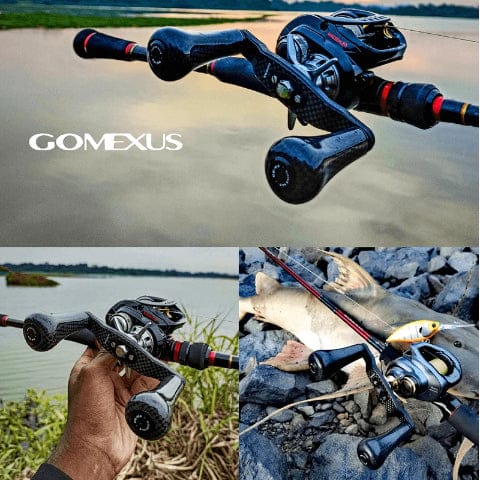
- Toray Carbon Fiber Construction: Crafted with a 5.5mm thickened plate for zero flex under maximum drag.
- 98mm Extended Reach: Ideal length for cranking power paired with 30mm slim carbon knobs for non-slip grip.
- Universal Plug & Play Fit: Direct screw-in installation for Shimano, Daiwa, Abu Garcia, and Lew's reels.
How to Choose the Right Extended Baitcaster Handle Length
Selecting the ideal length depends heavily on your primary fishing technique and target species:
- 90mm - 95mm: Excellent all-around upgrade for general bass fishing, spinnerbaits, and medium crankbaits.
- 98mm - 105mm: The sweet spot for heavy cover flipping, deep cranking, and throwing mid-sized swimbaits.
- 110mm - 120mm: Heavy-duty profile designed specifically for trophy swimbaits, Musky, and heavy saltwater casting.
Conclusion: Is an Extended Baitcaster Handle Worth It?
Upgrading your stock setup to a custom extended baitcaster handle is one of the most cost-effective performance improvements you can make. By maximizing leverage, improving grip stability, and reducing physical strain, handles like the Gomexus DC-FA30 empower you to fish longer and land trophy fish with total confidence.
-

Why the Silver King Rules the Atlantic Flats
It is no surprise that the Tarpon (Megalops atlanticus) sits at the absolute top of the global angling bucket list. Known reverently as the Silver King, this prehistoric powerhouse checks every single box for a world-class saltwater gamefish: raw explosive power, relentless stamina, and weights that routinely top the 100-pound (45 kg) mark.
Their most iconic—and heartbreaking—attribute is their propensity for violent, acrobatic leaps. Watching a six-foot (2 m) slab of chrome-clad muscle twisting and contorting in mid-air is a spectacle no angler ever forgets. Over half of the IGFA world-record Tarpon have been pulled from Florida’s 1,350 miles of fertile coastline, where professional guides dial in on complex tides and moon phases to intercept these monsters.

The Tactical Playbook: Surviving the Leap
Successfully jumping a Tarpon requires a high-stakes blend of heavy tackle and flawless technique. A standardized tarpon setup consists of a medium-heavy to extra-heavy spinning rod paired with a high-capacity saltwater spinning reel loaded with at least 250 yards of 50 to 60-pound braided line.
The absolute critical moment happens the second the Silver King takes flight. Their violent, airborne head-shakes create immense kinetic energy that can instantly snap tight lines or throw heavy hooks.
To survive the jump, you must implement the legendary “Bow to the King” technique:
- The Launch: The instant the fish breaches the surface, thrust your rod forward toward the fish to throw maximum slack into your line.
- The Slap: Let the fish crash back into the water against a limp line, preventing the line from snapping under the fish's own falling weight.
- The Re-engagement: The millisecond the fish is submerged, reel down aggressively to clear the slack and resume the drag battle.

Upgrading Your Cranking Leverage for the Heavy Grind
If you survive the initial aerial assault, the true test of endurance begins. Tarpon possess deep oxygen reserves, turning fights into grueling, hour-long tug-of-wars. In these brutal wars of attrition, massive lactic acid buildup will set into your cranking arm.
Standard factory reel handles (often small T-knobs or slick oval grips) are highly prone to slipping when covered in saltwater, sweat, and slime. Furthermore, they fail to provide the necessary rotational leverage required to turn the head of a hundred-pound fish against a locked drag.
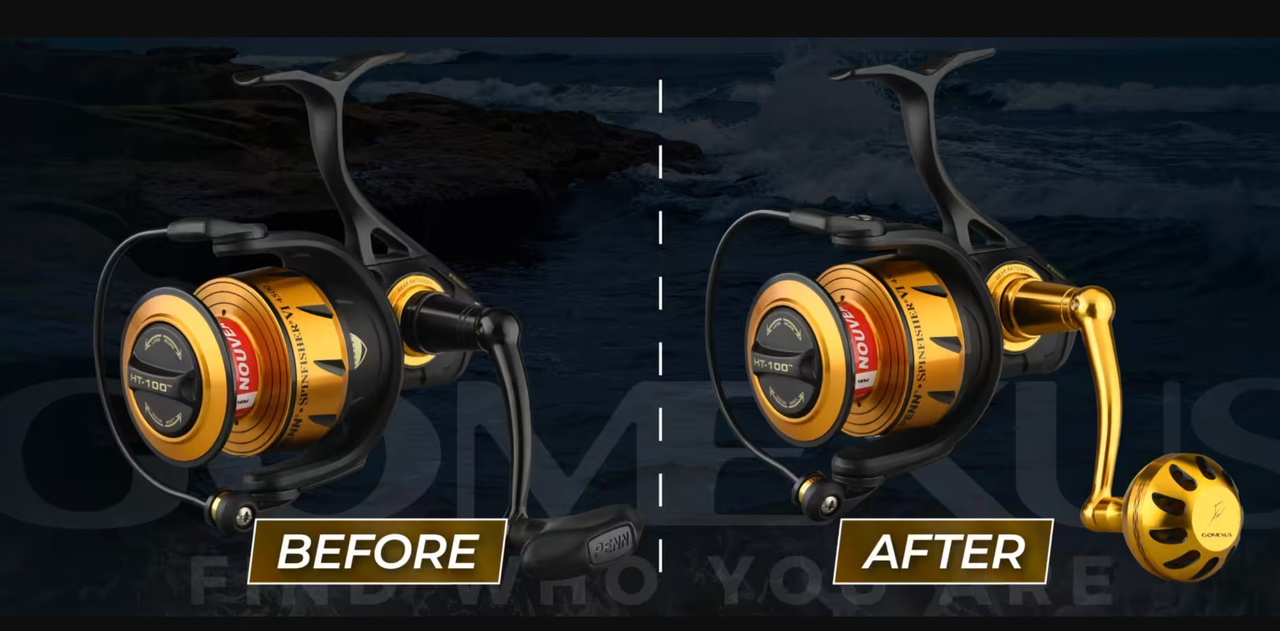
Upgrading to a Gomexus Aluminum Power Handle alters the mechanical math of the fight. The oversized, ergonomically curved round aluminum knobs afford a full-fist grip that eliminates hand cramping, while the extended handle arm provides increased torque—allowing you to transfer more raw winching power directly into the main gears without handle flex.
Pro-Grade Reel & Handle Compatibility Blueprint:
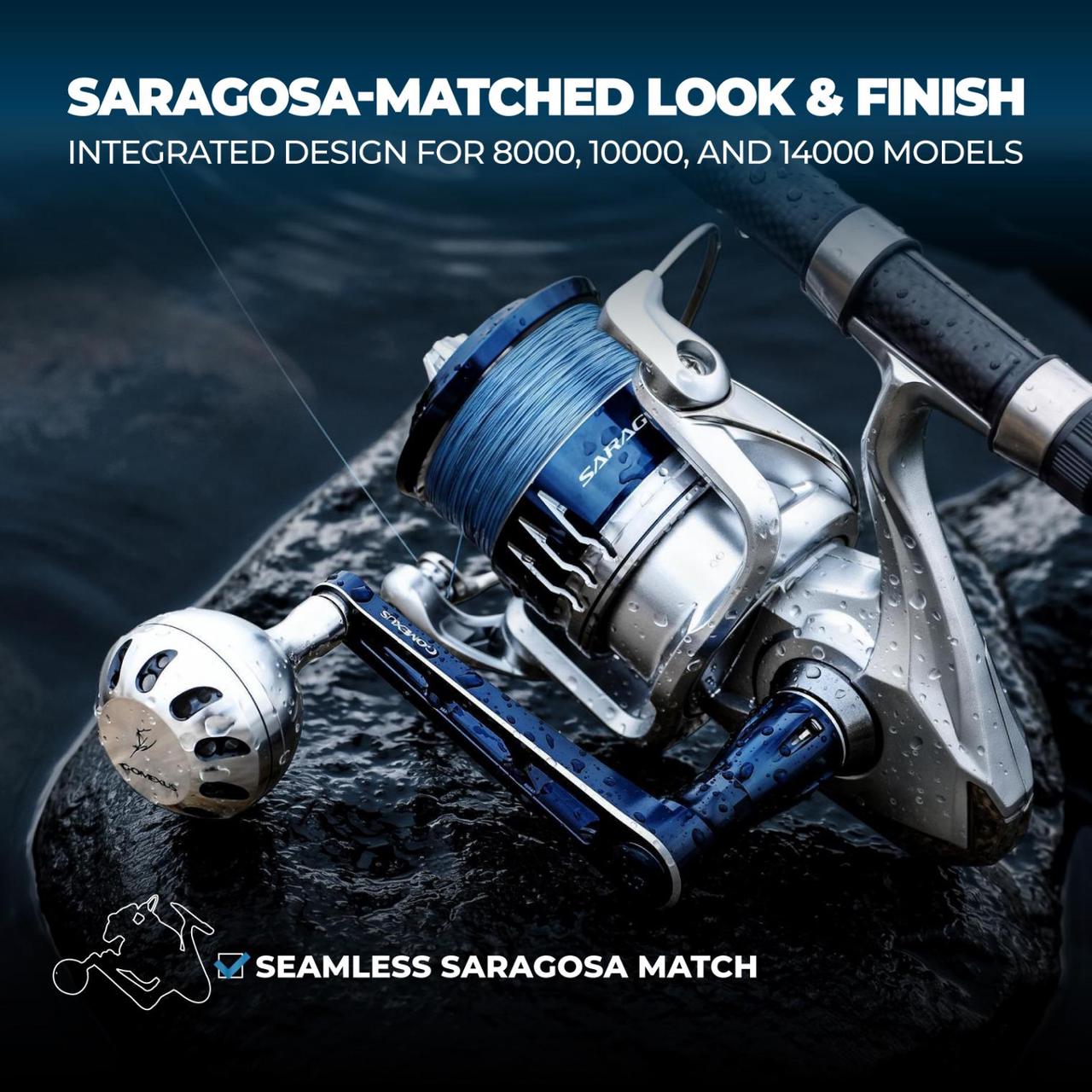
For Shimano Saragosa SW(8000-14000): Upgrade to the 🔄 Gomexus Aluminum Power Handle for Shimano Saragosa/Twinpower.
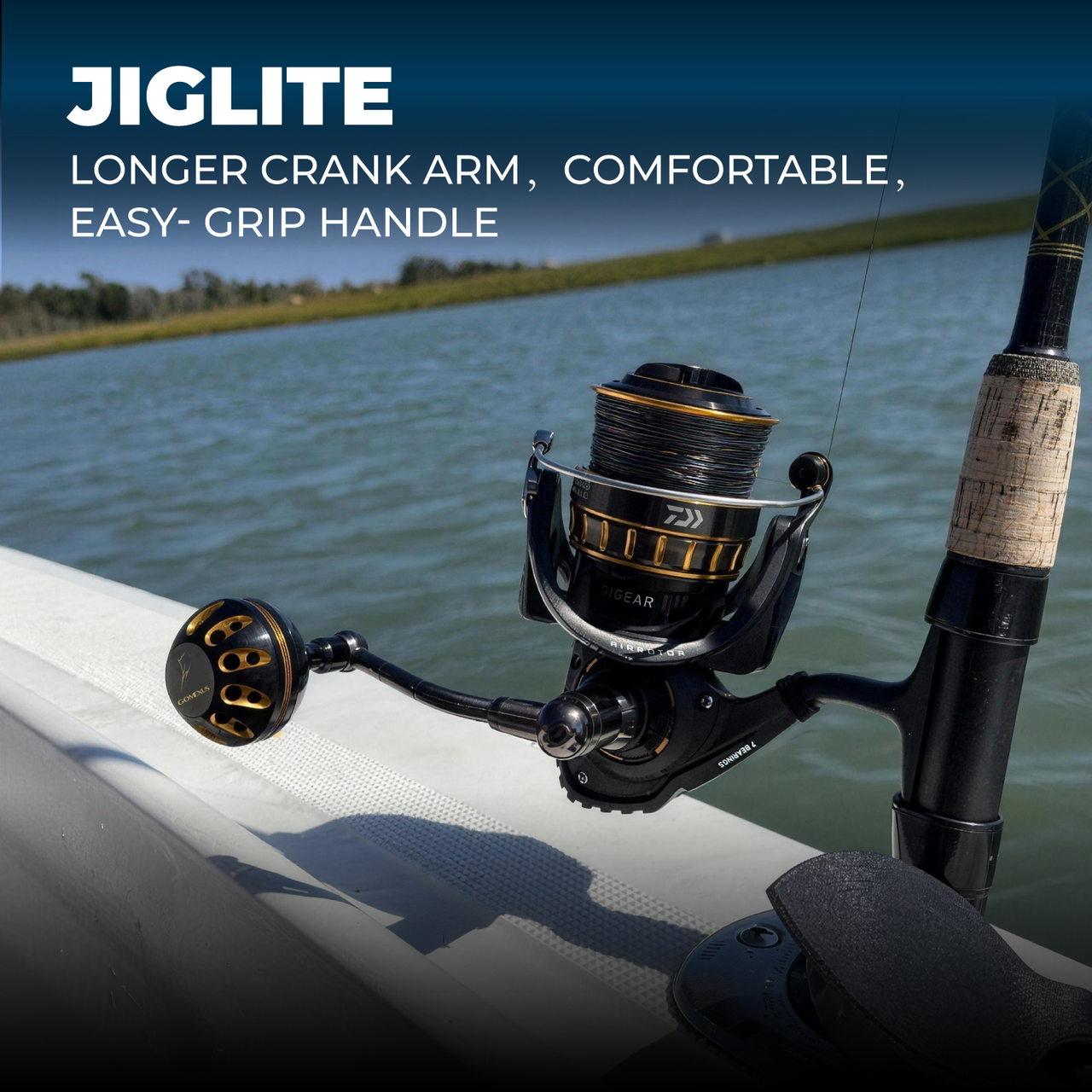
For Daiwa BG (4500-5000): Upgrade to the 🔄 Gomexus Plug & Play Aluminum Power Handle for Daiwa BG.
For Penn Spinfisher (6500-7500): Upgrade to the 🔄 Gomexus Plug & Play Aluminum Power Handle for Penn Spinfisher.
Sight-Casting Strategy: Spotting the Silver Flash
Tarpon fishing on gin-clear flats or shallow backcountry bays is a visual game. Because these fish are often highly spooky, success relies entirely on Sight-Casting—spotting the fish cruising or "rolling" at a distance and placing your live mullet or crab precisely in their travel lane before they detect the boat.
Under a blinding saltwater sun, surface glare is an impenetrable wall. You cannot target what you cannot see. This makes high-performance eye protection just as critical as your drag system.
The Gomexus F15 Polarized Sunglasses are engineered precisely to pierce this aquatic glare. Featuring advanced polarization matrices, the Green Mirror and Brown tints block blinding UV rays while maximizing contrast against sand flats and muddy back-bays. They allow your eyes to penetrate the upper water column so you can spot the dark silhouette or silver flash of an approaching King long before it enters your blind spot.
(Bonus: Paired with UPF 50+ apparel and broad-spectrum SPF 30 sunscreen, you protect your vision and your skin during grueling 8-hour bakes on the skiff.)
The Ultimate Accomplishment
Tarpon fishing is a masterclass in patience, heavy rigging, and physical endurance. The odds are always stacked in the Silver King’s favor. But by pairing tactical techniques like "bowing" with mechanical upgrades like high-torque Gomexus handles and glare-cutting optics, you tilt the scales back in your direction. When that giant silver shield finally rolls alongside the skiff for a quick photo and a safe release, you’ll understand exactly why anglers chase this high for the rest of their lives.
Maximize your leverage before the migration begins. Explore the[Gomexus Saltwater Power Handle Series] and gear up for the King.
-
⚡ Quick Guide: How to Catch Fish in the Cold
- Understand Lake Turnover: As surface water cools to 39°F (4°C), it becomes dense and sinks, forcing deep, stagnant water to circulate.
- Target Deep Water Stability: Fish seek stable water temperatures near deep drop-offs, creek channels, and winter basins.
- Slow Down Your Retrieve: Fish metabolism drops in cold water; use small finesse jigs, blade baits, and dead-sticking techniques.
- Warm-Touch Tackle Upgrades: Swap freezing metal reel knobs for lightweight cork handles to maintain grip control without cold fingers.
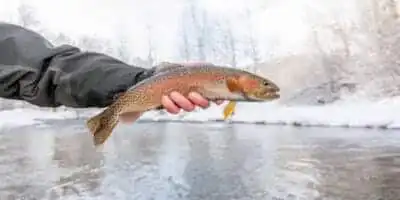
Learning how to catch fish in the cold is one of the most rewarding challenges for dedicated anglers. When temperatures drop and lakes undergo turnover, many fishermen pack away their tackle assuming fish have gone dormant. However, game fish like largemouth bass, walleye, and crappie continue to feed throughout late fall and winter—they simply alter their movement patterns and energy expenditure. Knowing how to catch fish in the cold requires adapting your tactical mindset, downsizing your bait profiles, and fishing key thermal structures.
Understanding Fall Lake Turnover Mechanics
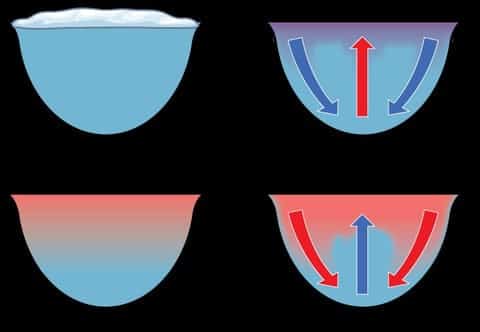
Before learning how to catch fish in the cold effectively, you must understand what happens beneath the surface. As autumn temperatures plummet, the upper water layer cools until it reaches maximum density at approximately 39°F (4°C). This heavy surface water sinks to the bottom, pushing up oxygen-depleted bottom water—a process known as fall lake turnover.
During turnover, water clarity degrades, sulfur smells may rise, and oxygen levels scatter unpredictably. Fish react by dispersing temporarily until the water column settles into its stable winter thermal stratification.
Cold Water vs. Warm Water Fishing Adjustments
Factor Warm Water Season Cold Water Season (Below 50°F) Fish Location Shallows, weed beds, surface structure Deep channels, winter basins, steep bluffs Retrieve Speed Fast burn, aggressive jerks, topwater walking Ultra-slow crawl, vertical jigging, dead-sticking Lure Size Full-profile swimbaits & large power crankbaits Downsized finesse plastics, blade baits, small jigs Where Do Fish Hide in Colder Months?
To master how to catch fish in the cold, focus your casting efforts on key high-probability structures where water temperature remains most stable:
- Steep Rock Bluffs & Ledges: Vertical rock walls absorb winter sunlight during the day and provide instant depth access without requiring fish to swim long distances.
- Deep Creek Channel Bends: Natural current intersections retain slightly warmer water and trap wintering baitfish schools in predictable locations.
- Remaining Green Vegetation: Living deep weeds emit oxygen and attract baitfish, whereas dead brown weeds deplete oxygen levels in icy water.
Essential Cold-Weather GearGomexus Lightweight Cork Knob Handle (BDH-CA27)
Cold weather turns standard metal reel knobs into icy finger-numbing surfaces. The Gomexus Super-Light Cork Handle uses natural portuguese cork material that stays warm to the touch, providing a comfortable, non-slip grip even when wearing bulky winter gloves.
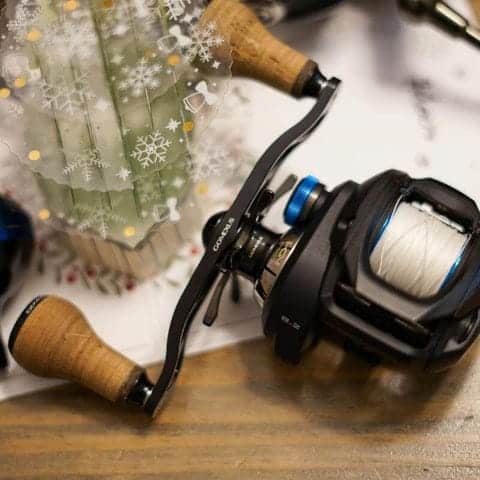
- Warm-Touch Natural Cork: Eliminates freezing metal contact in sub-zero weather.
- Non-Slip Control: Maintains superior palm traction against rain, sleet, and fish slime.
- Ultra-Lightweight CNC Arm: Reduces wrist fatigue during long slow-rolling winter retrieves.
Frequently Asked Questions (FAQs)
Q: Can I still catch fish from the shore in cold weather?
A: Yes, but target bank areas with immediate access to deep water, such as rocky dam walls, steep river bends, or marina piers where fish congregate.
Q: What is the best time of day for cold-water fishing?
A: Unlike summer when dawn is best, winter fishing peaks from mid-afternoon to late afternoon when sunshine warms up shallow rocks slightly and activates baitfish.
Conclusion
Mastering how to catch fish in the cold comes down to patience, location awareness, and gear comfort. By slowing down your presentations, targeting deep wintering structure, and upgrading your setup with warm-touch components like the Gomexus Cork Knob Handle, you can enjoy productive days on the water all season long.
-
⚡ Quick Guide: Leader with Braided Line
- Stealth & Invisibility: Braided line is opaque underwater. Adding a fluorocarbon leader makes your rig virtually invisible to line-shy fish.
- Abrasion Resistance: Braid frays easily against sharp rocks and timber; mono or fluoro leaders absorb heavy mechanical wear.
- Shock Absorption: Zero-stretch braid can pull hooks out of fish mouths; a mono leader adds crucial stretch during hard lunges.
- Best Knots: Connecting your braid to leader with an FG Knot or Double Uni Knot ensures smooth guide clearance and maximum knot strength.
Setting up your fishing reel with a leader with braided line is one of the most effective ways to combine brute winching power with stealthy finesse presentation. While braided line offers unmatched strength-to-diameter ratios and zero stretch for instant hooksets, tying braid directly to your lure can lead to spooked fish and unexpected snap-offs. In this guide, we break down why adding a leader transforms your fishing performance and how to rig it correctly.
Why Braided Line Needs a Leader
Braided mainlines excel at long-distance casting and bite detection, as documented by experts at Bassmaster. However, braid suffers from three distinct physical limitations when fished alone:
- High Underwater Visibility: Braid is woven from opaque polyethylene fibers. In clear water, fish easily detect the dark line profile leading straight to your lure.
- Low Abrasion Resistance: Braid possesses immense linear tensile strength, but sharp rocks, barnacles, or timber can sever tight braid fibers instantly under tension.
- Zero Stretch Cushioning: Because braid does not stretch, aggressive strikes or sudden head shakes can rip treble hooks straight out of soft fish mouths.
Fluorocarbon vs. Monofilament Leader Comparison
Selecting the right material when tying a leader with braided line depends on your target depth, water clarity, and presentation strategy according to fishing line optics specifications:
Leader Material Visibility & Optics Stretch & Shock Best Technique Application Fluorocarbon Nearly invisible (Matches light refraction of water) Low stretch; excellent sensitivity Clear water finesse, jigs, deep cranks & bottom contact. Monofilament Moderate visibility; supple texture High stretch; maximum shock absorption Topwater lures, poppers, live baiting & heavy shock rigs. 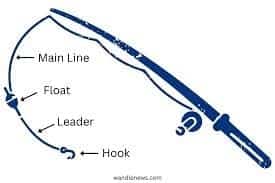
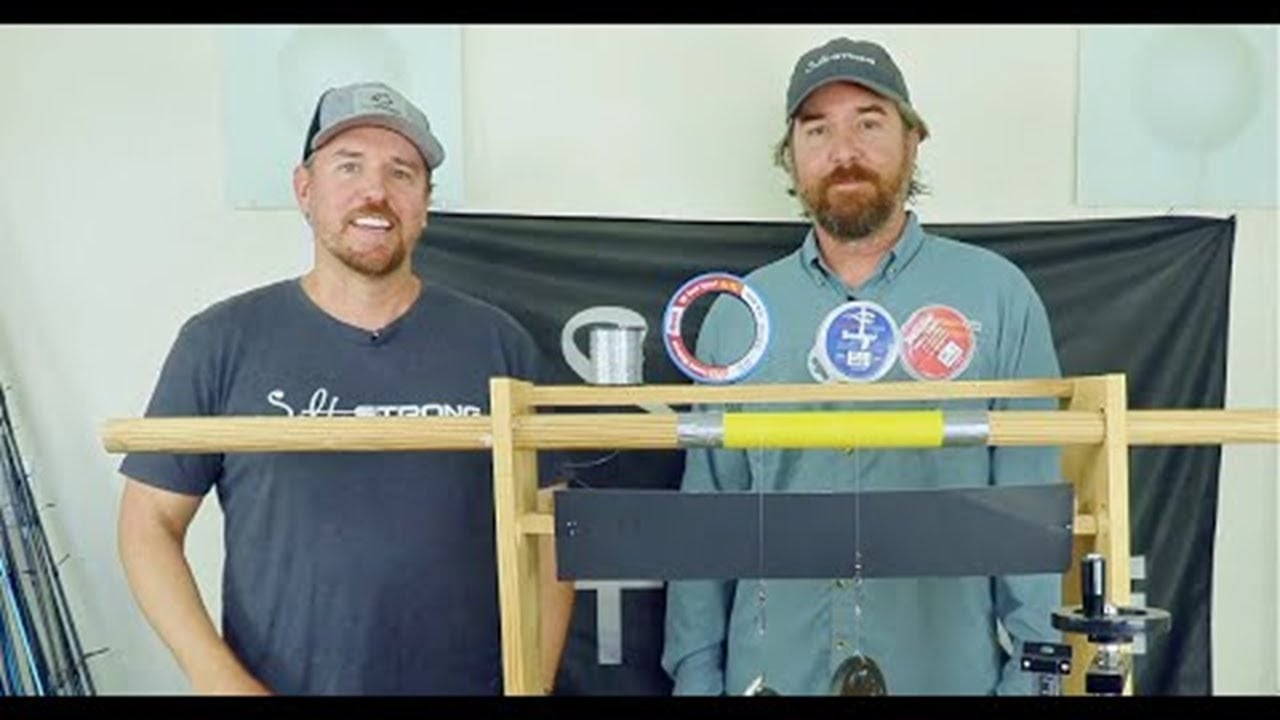
Video: Monofilament vs. Fluorocarbon Leader Lab Test
How to Connect Your Leader to Braided Line
Connecting a slick braided line to smooth fluorocarbon or monofilament requires a dedicated line-to-line knot that easily passes through rod guides:
- FG Knot: The ultimate ultra-slim connection for casting. It offers 95%+ strength retention and glides through micro-guides with zero friction.
- Double Uni Knot: Quick, easy to tie on the boat deck, and highly reliable for light-to-medium tackle applications.
- Alberto Knot (Modified Albright): Compact and fast to tie, ideal for joining thin braid to heavier leader stock.
Performance UpgradeMaximize Your Braid-to-Leader Sensitivity with Gomexus Handles
When fishing zero-stretch braid paired with a stealthy leader, every micro-bite counts. Upgrade your baitcasting or spinning reel with a Gomexus Power Handle & CNC Knob to eliminate gear play and transmit subtle tick strikes directly to your fingertips.
Recommended Leader Lengths for Common Fishing Scenarios
Choosing the correct leader length ensures maximum line protection while maintaining easy casting performance:
- Standard Inshore / Bass Casting (3 to 6 Feet): Short enough to keep the knot outside the reel spool, eliminating line friction during casts.
- Deep Vertical Jigging (8 to 12 Feet): Gives extra shock protection and stealth when dropping lures straight down in deep water.
- Heavy Surf & Jetty Casting (10 to 15 Feet): Keeps delicate braided line well above jagged rocks, shell beds, and heavy shore break.
Frequently Asked Questions (FAQs)
Q: Do I really need a leader with braided line in murky water?
A: Yes. Even in dirty or stained water, a leader provides vital abrasion protection against underwater debris, rocks, and fish teeth that easily slice through braided line under tension.
Q: Should my leader line be stronger or lighter than my braided mainline?
A: Typically, anglers use a leader pound-test that is equal to or slightly lower than their braid mainline so that if you snag on the bottom, only the leader breaks—saving your main line.
Conclusion
Fulfilling your setup with a proper leader with braided line gives you the best of both worlds: unyielding line capacity and stealthy presentation. By matching your leader material and knot connection to your fishing environment, you protect your gear, eliminate line visibility, and land more trophy fish with confidence.