.svg)


⚡ Quick Guide: Lure Color Science
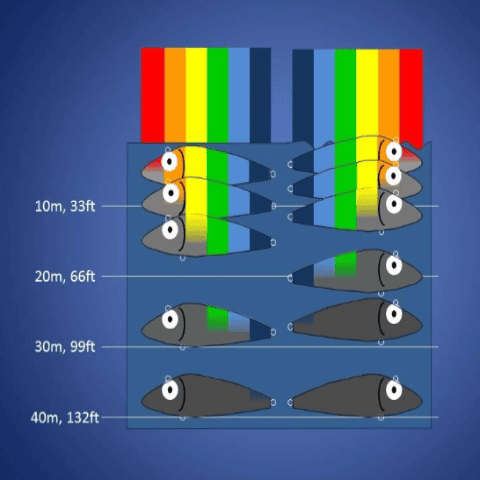
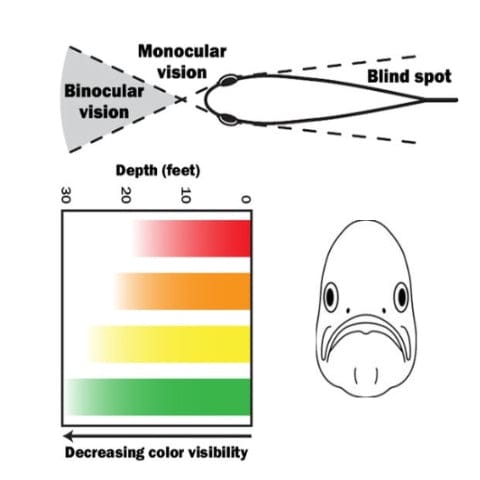
- Depth Matters: Red light disappears first (below 15–20 ft), turning gray/black. Blue and green wavelengths penetrate the deepest.
- Water Clarity Rule: Use bright, high-contrast colors (Chartreuse, Hot Pink, Firetiger) in murky water; use natural tones (Pumpkin, Silver, Olive) in clear water.
- Fluorescent & UV Advantage: UV and fluorescent lures react to invisible light, making them vital for overcast days, murky water, or deep structure.
Understanding lure color science is one of the most effective ways to increase your strike rate on the water. While lure action and depth control are critical, how a fish perceives color under varying water conditions often dictates whether they commit to a strike or turn away. In this guide, we dive into the physics of underwater light penetration, fish vision mechanics, and how to select the perfect lure color for any environment.
How Light Penetrates Water: The Physics of Underwater Color
When light enters the water column, it undergoes wavelength absorption. Water acts as a natural filter, stripping away long-wavelength colors first as depth increases.
| Color Spectrum | Absorption Depth | Underwater Appearance at Depth |
|---|---|---|
| Red | 15 – 20 feet | Fades rapidly into muted dark gray or black. |
| Orange & Yellow | 30 – 45 feet | Loses brightness, shifting toward neutral brownish tones. |
| Green | 65 – 80 feet | Retains vivid contrast in both clear and algae-stained water. |
| Blue & Violet | 100+ feet | Penetrates deepest; remains highly visible in deep saltwater. |
How Fish Perceive Color: Rods, Cones, and Contrast
According to research on fish retinal vision, predatory species like Large Mouth Bass, Walleye, and Inshore Redfish possess specialized cone cells in their eyes optimized for their native habitats.
🌊 Clear Water Scenarios
In high-visibility water, game fish closely inspect prey. Opt for natural baitfish match-ups like translucent silver, watermelon, green pumpkin, and subtle chrome finish.
🤎 Murky / Stained Water
Low clarity reduces visual range. Use high-contrast or fluorescent colors like Chartreuse, Firetiger, Solid Black, and Hot Pink to emit a sharp silhouette.
The Power of Fluorescent and UV Lures Underwater
Fluorescent colors behave differently than standard painted pigments. They absorb invisible ultraviolet (UV) light waves and re-emit them as visible long-wavelength light. This chemical reaction allows fluorescent lures to glow brightly even under low-light overcast conditions, murky water columns, or deep structure.

Gomexus Cyberbait 240 Metal Glide Bait
Combine advanced lure color science with extreme physical attraction. The Cyberbait 240 is built with X-Stretch technology and a CNC metal frame that emits continuous acoustic sound waves underwater to provoke aggressive feeding strikes from trophy fish.
- X-Stretch Life-Like Action: 240mm (9.45″) / 4.3oz floating glide bait with interchangeable lips and replacement tails.
- Acoustic Metal Sound Waves: Emits underwater resonance to trigger strikes in murky water or low-light conditions.
- Heavy-Duty Terminal Tackle: Pre-equipped with ultra-sharp, anti-rust BKK treble hooks for maximum hook-up rates.
- Freshwater & Saltwater Versatility: Designed for long-distance casting and high-drag pressure.
Practical Rules for Lure Color Selection
When rigging up on the boat deck or shoreline, follow this simple 3-step decision matrix based on lure color science:
- Sunny Days & Clear Water: Natural translucent patterns (Silver Shad, Ghost Minnow, Watermelon).
- Overcast Days & Stained Water: Solid or reflective metallic patterns (Gold, Chrome, Chartreuse Lime).
- Low Light / Night Fishing: Solid Dark Colors (Black, Dark Purple) that create a distinct, sharp contrast silhouette against the surface sky.
Conclusion
Mastering lure color science eliminates the guesswork from your tackle box. By matching your color selection to water depth, clarity, and light conditions, you present a lure that game fish can easily locate and strike. Keep a balanced palette of natural and high-contrast lures ready, adapt as weather shifts, and fish with total confidence!