.svg)
Tag Archives: Fishing Reel
-
 Loading More
You will often come across professional anglers using both kinds of reels. However, each reel has its applications. Hence, you need to pick the one that best suits your fishing preferences. You can go through this guide to learn the difference between a casting and a trolling reel.
Casting reel introduction
A baitcasting reel relies on a rotational spool for storing the fishing line. The line leaves the spool directly so the rod guides are smaller. These reels allow the line to travel faster for a more accurate and longer cast. The reel with an open spool can be cast farthest which also makes it easier for the line guide to working with a lure.
A bait caster makes it easier to fish all day. Anglers prefer using a baitcasting reel for frogs and topwater lures as they can apply immediate pressure whenever a fish explodes on the lure. Baitcasting reels are more comfortable for making cast after cast and working heavy lures owing to their lower center of gravity.
Trolling reel introduction

Trolling reels are more like heavier versions of a baitcasting reel. However, these come with greater line capacity and higher drag pressure. These reels either use a lever drag or a star drag. A star drag can be set at a specific drag pressure for the duration of the fight. In the case of larger fish, a lever drag can adjust the range of preset settings for adjusting the pressure during the fight. In addition, these reels can be used for vertical jigging and bait fishing.
Trolling is one of the most effective ways to catch a fish. It is one of the popular fishing techniques which is equally exciting for both experts and beginners alike. The technique involves dragging a hooked lure or bait through the water from a moving boat. The trick here is to make the fish believe that the bait is moving prey.
Difference between a casting reel and a trolling reel
- Weight
Weight and mechanism of action are the two major differences between a casting reel and a trolling reel. A casting rod comes in a wider array of action, weight, and power than a trolling reel. This is because you need to have different kinds of action, power, and weight to manage fish of various sizes.
- Application
A trolling rod has limited application and a specialized design. It is the most ideal tool for the job when you want to catch larger fish while trolling. A casting rod is much more sensitive and can be used for saltwater fishing as well. However, the reels restrict their application based on the drag that can be applied to the bait caster reel. It will not hold up for saltwater fishing for a long time.
Trolling reels are ideal for smaller fish in freshwater settings such as small bass, small trout, crappie, panfish, and others. A baitcasting reel on the other hand can hold a larger line. when you set up accordingly, you will not have any problem handling small to medium-sized fish in fresh or saltwater such as reds, smaller bonefish, trout, bass, and salmon.
Trolling reel product recommendation
Apart from the styles of the kinds of reels, the species you target and your personal preference also plays a crucial role in which rod you will choose. If you are not sure what you need to go ahead with, then you can check out our recommendation which is approved by the experts.
Gomexus Trolling Reel
The Gomexus Saltwater HX series and the RA600D are the most ideal trolling reels you can find in the market currently. The HX series promises the strength and durability of a solid aluminum frame thereby making it one of the most ideal reels for giant fishes. These are perfectly suited for long-range fishing.
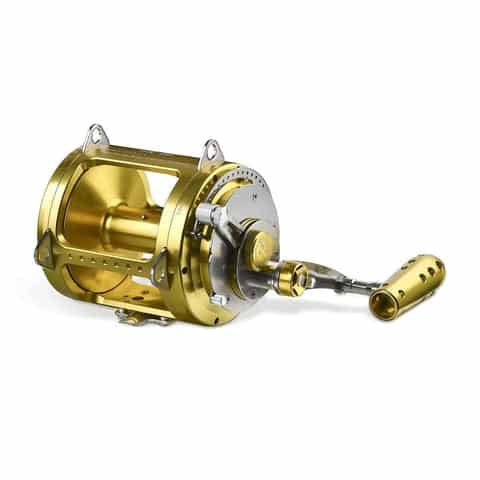
The best thing about these trolling reels is that they feature a unique design, are made of premium material, and come with the perfect drag system. The HX series features nine stainless steel ball bearings. All the internal components such as shafts and gears are hardened and tempered using stainless steel. The reel was anodized for durability and to feature a saltwater-resistant finish.
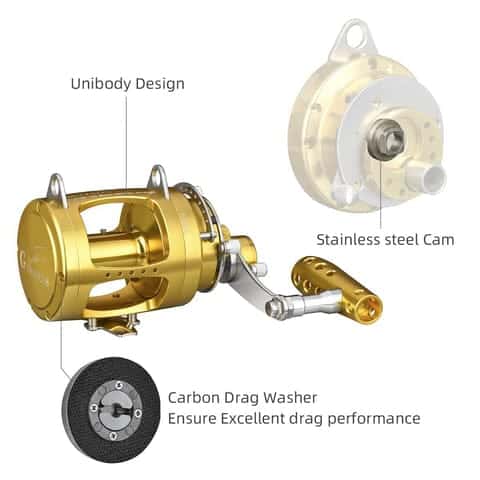
The best thing about the HX series is that it has a smooth shift function. The CNC machine-cut aluminum frame and spool make it a perfect, oversized reel for the big game. The HT 100 carbon fiber drag system ensures smoother start-up even in extreme drag conditions. The RA600 series is built using key technology which makes it one of the best value-level reels on the market. The reel has been anodized to be durable even in harsh saltwater conditions.
Key Features
- Made from premium material
- Features a unique design and a perfect drag system
- The product comes with a 12-month warranty
- Powerful lever drag system with adjustable strike presets
- Integrated molding cam boosts transmission efficiency
- Marine-level gear shift box ensures tough and durable performance for a long time
- Higher line capacity of 1740 yards
Summary
Both casting and trolling reel have their specific set of applications. Trolling reels are more like heavier versions of baitcasting reels and come with greater line capacity. Featuring either lever or star drag, these can be adjusted for a range of preset settings. Baitcasting reels are suitable for anglers who love targeting stronger and larger fishes. This is because it is sturdier, more precise, and the most durable reel available on the market. Trolling reels are also similar and meant for experienced, professional anglers. the only downside is that these reels are much more complicated to handle. Depending on your requirements, you can decide whether you need to go for a casting or a trolling reel.
-
 Loading More
Choosing the right fishing line ultimately depends on the kind of fishing rod that you are using the reel with. Hence, it is essential to be aware of the kinds of fishing reels and their applications so that you use the one that is apt for your application.
Parts of a fishing reel
If you are keen on becoming a professional angler, then it is important to be aware of the different parts of a fishing reel and the purpose that each part serves.
Reel body
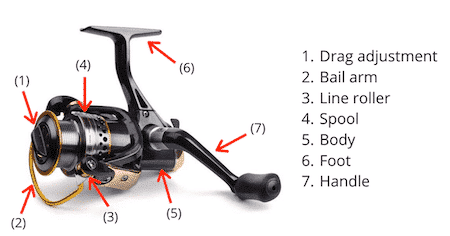
The housing or the reel body refers to the main component of the fishing reel. The body comprises a support arm, a foot connecting to the rod, and the gearbox housing. Most reel bodies are made either from aluminum or graphite. Aluminum is preferred as it is stronger but the drawback is that it is also heavier and is not apt for saltwater conditions. Graphite would make a good choice if you are considering a reel for saltwater fishing owing to its corrosion-resistant qualities.
Fishing reel handle
The handle is one of the most important parts of a fishing reel. As the handle is rotated by hand for retrieving the line back to the rod after making a cast, it needs to be smooth and comfortable to hold. Most of the reel handles available today are either T-bar or round-shaped. They can be operated either by left or right hand depending on the socket you use for securing the handle to the body of the reel.

Gears
The gear is the major component present in a fishing reel. The moment you turn the handle, the gears engage and assist with either fighting or luring a fish. The amount of pressure that gears can put depends on the quality and the design. All premium quality reels come with helically machined gears that create a more efficient and quality product in the end.
The gears in a fishing reel are usually set to a particular ratio or speed. This implies, if the gear ratio of a fishing reel is 5:2:1 then for every turn of the handle, the rotor will turn 5.2 times. The ratio can be as fast as 7 and as slow as 3. Gears are constructed from machined and cast metals of which brass is a favorite. Brass gears are super strong and lightweight.
Bearings
Fishing reel bearings are located through the baitcasting and spinning reel wherever there is a need for the components to rotate. They serve the rotation of spools, knobs, gears, and even wind devices. Without bearings, the operation wouldn’t be any smooth and an enjoyable experience as it is today. All high-grade reels rely on precision, stainless steel radial ball bearings. Their deep-groove construction helps in accommodating both axial and radial loads in fishing reels.
Caster foot
The reel foot serves as the bridging point between the reel and the rod. It is a crucial part as it fits the reel body securely so that both components stay firm during the swift action of a cast and can withstand the tension of a fighting fish on the retrieve. The standard foot in a reel is rectangularly shaped and seems like an extension of the reel body itself as it is made from the same material.
Spool
The spool is the part of the reel that holds the fishing line and also plays a crucial role in ensuring the smoothness of operation and in casting distance. Most spools are made from either graphite or anodized aluminum. Graphite is lighter while aluminum spools offer greater strength. The most striking feature of the spool is the drag adjustment knob that looks like a dial. You can use it to control the operations.
Drag
Drag is an important feature and all anglers need to be aware of it. It refers to an added pressure that a fish has to overcome to pull out the line. It is constructed in such a way that friction plates are installed in the reel. The anglers can set it by turning the knob on the reel. Each reel comes with a maximum drag which is stated in pounds or kilograms.
The working principle of fishing reels
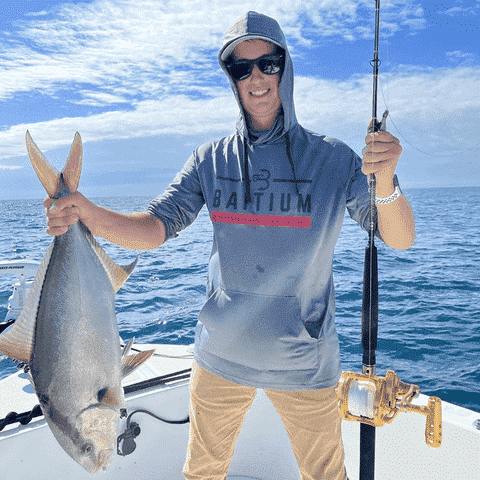
There are different kinds of fishing reels but their working principle is the same. Here is an example of how a spinning reel works as it is preferred by both beginners and experienced anglers. A spinning reel comes with several different parts – an open face and a fixed spool. A fixed spool stays in place while casting and the fishing line is unwrapped from it. These reels are easy to use and are suitable for smaller fish as they work well with smaller baits.
Spinning reels come with a bail wire and a small line roller attached to them. This guides the line while reeling in. the bail is the crucial part as it keeps the line in place and lowers the possibility of a knot while using a fishing reel. For casting, you need to flip the bail up for releasing the line and allow it to unwrap. For retrieving, you need to close the bail and rotate the handle slowly. The difference in different kinds of fishing reels lies in the spools, the line release, and the retrieve mechanisms.
Summary
Anglers need to be aware of what a fishing reel is, its parts, and how it works. Understanding the working principles and differences is important as it will help you choose the best reel type and size for your requirements. Though reels may seem like complex structures with several internal working parts, you need to be aware of the basics to gauge and compare their performance. This will keep you on top of the game and upgrade to the best fishing reel available for your fishing adventures.
-
 Loading More
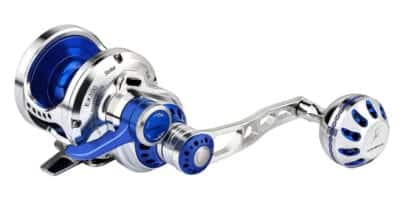
There is plenty of reliable jigging reel available in the market of which Slow Pitch Jigging Reel LX50 is a popular option. You can explore all the best options available currently in the market in this guide.
Product Recommendation
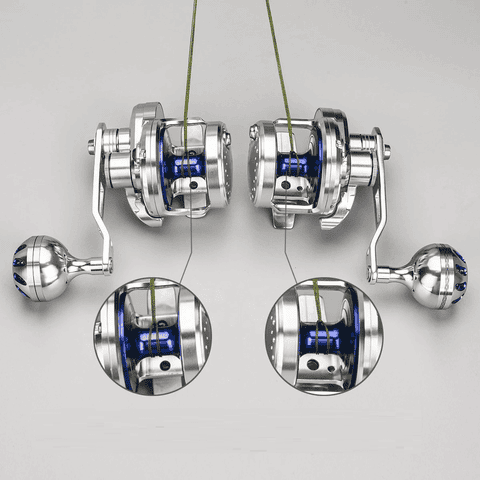
With jigging gaining worldwide interest and popularity, manufacturers are creating better and better jigging gear. But not all gear is created equal. There is gear made for slow-pitch jigging and speed jigging. Speed jigging generally relies on thinner, longer “knife” while slow-pitch jigging involves more finesse. We have shortlisted the best in the market in our recommendation.
Slow Pitch Jigging Reel LX50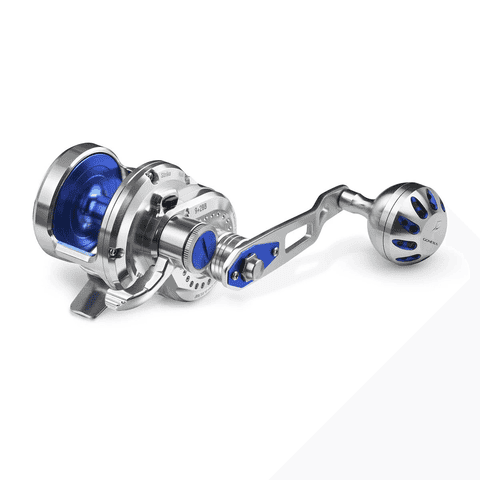
The Gomexus LX50 is a durable structure designed to withstand tough saltwater conditions. It is a perfect jigging reel for redfish, striped bass, flounder, snappers, and other saltwater species. Its top-notch carbon fiber drag system delivers smooth operation and demonstrates exceptional power. The expertly machined aluminum spool is both compact and sturdy.
Advantages
*One-piece frame delivers ultimate strength
*Tilted teeth ensure smooth performance for high gear
*Anti-corrosive components promise many years of use
*Carbon fiber frags ensure superior stopping power, wear resistance, and smoothness
*A stronger and larger gear shaft ensures increased torque
*A narrow spool design ensures easier line management
*Product backed by a 12-month warranty
Disadvantages
*The line gets stuck when using mono but works well with braidMaterial
Stainless Steel, Carbon
Fishing Line Type
Braided
Gear Ratio
7:1:1
Inches per crank
43”
Max drag
40 lb.
Bearings
9BB+2RB
Light Weight
11 oz.
Line Capacity
30 yds
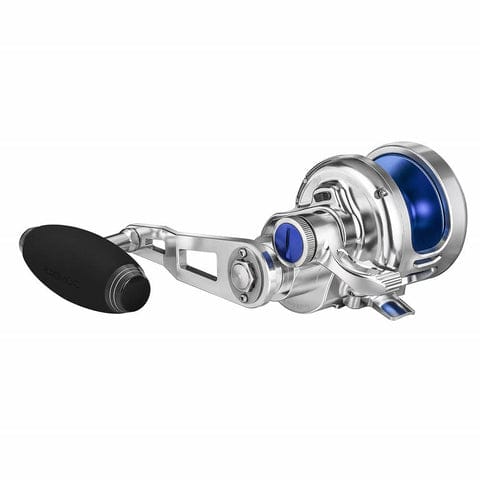
Fishing with narrow reels has become immensely popular these days in several parts of the world. This is because narrow spool reels offer several benefits even while jigging with light metal jigs. Moreover, narrow spools require less attention to minding a level wind while reeling in. these are also easier to stop with your thumb whenever you get strikes on the drop thereby lowering the backlash.
The Gomexus SX450 is a durable lightweight structure that can withstand tough saltwater conditions. The premium carbon fiber drag system ensures smooth operation. The aluminum spool is expertly machined which makes the reel compact and sturdy. It is perfect for snappers, tuna, and stripers.
Advantages
*One-piece frames promise ultimate strength
*Pre-set lever drag features accurate drag setting
*Treated stainless steel ball bearings promise smoother operation- 9BB+2RB bearings ensure smooth operation
- The gearbox has been manufactured with high precision
- Easier line management with narrow spool design
- The product is backed with a 12-month warranty by the makers
Disadvantages
You need to be a little careful with the drag settings
Product Parameters Table
Material
Stainless Steel, Carbon
Fishing Line Type
Braided
Gear Ratio
6:3:1
Inches per crank
46”
Max drag
30-50lb.
Bearings
9BB+2RB
Light Weight
14 oz.
Line Capacity
190 yds
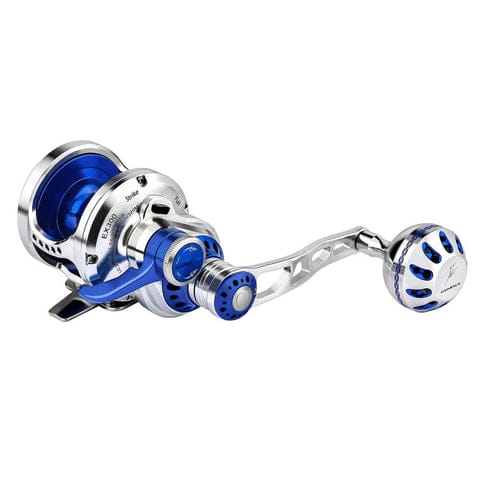
The slow pitch is an ideal jigging reel for amberjacks, tunas, stripers, and snappers. It is durable, lightweight, and compact. The best thing about this reel is that it has been precision engineered to deliver exceptional performance in tough saltwater conditions. The carbon fiber drag system delivers exceptional torque, power, and silky-smooth operation. This will help you land the biggest game fish with much ease and confidence. The aluminum spool ensures a maximum line capacity of 350 yards of 30 pounds braided line.
Advantages
- Compact design can tackle a wide variety of fishing challenges
- Smooth lever drag can deliver 50 lbs. of drag force
- Promises superb cranking power by lowering friction between the spool shaft and pinion gear
- The aluminum power knob promises great grip
- Features a high line capacity of 350 yards
- Ideal fishing jigging reel for flounder, snappers, redfish, seabass, and other saltwater species
Disadvantages
- The line tends to get stuck in seams in mono and hence advised to use a braid
Product Parameters Table
Material
Stainless Steel, Carbon
Fishing Line Type
Braided
Gear Ratio
6:3:1
Max drag
50 lb.
Bearings
9BB+2RB
Light Weight
15 oz.
Line Capacity
350 yds
Summary
There are plenty of jigging reels available in the market for enthusiasts. You need to compare the best options available and understand your requirements to learn which one would be a perfect match for your needs. We have reviewed the top options along with their key features, advantages, and disadvantages. You can consider them to choose your perfect fit.
FAQs
1.What is the latest discount price of a jigging reel?
You can save up to 8 percent on your purchase by grabbing exclusive Black Friday deals.
2.How to choose the jigging reel that suits you?
Jigging reels are designed to withstand hours of use in tough saltwater conditions. There are two major categories when choosing jigging reels: spinning and overhead reels.
- The most popular options are overhead reels as they are lighter, cost less, and are easier on the wrists.
- another crucial aspect to consider is narrow spools as they allow you to focus more on jigging rather than laying the line evenly on the spool. It also lowers wobbling and sideways torque.
- Look for reels that have high drag ratings of 10-20kg to prevent hard-fighting fish.
- Drag also needs to remain smooth from the beginning to the end.
- Don’t be tempted by the cheapest reels available in the market.
3.Gomexus jigging reel hoe lang is de garantie? How long is the warranty valid?
It is usually 1 year but differs from one product to another. Hence, it is advised to check the warranty agreement under each product to learn more about the warranty tenure before purchasing any product.
-
 Loading More
What is a Fishing Reel?
The fishing reel is the part of the fishing rod which carries/stores the line. It is from the reel that the line is unraveled and chucked out in the water, and it is back in the reel that the line is later winded into. (See below. It’s the weird gun-like thing at the handle.)

There is a range of different types when it comes to fishing reels. Depending on the kind of fish you’re trying to catch (and also on your level of expertise/skill), a specific type of reel will be the ideal choice and will be better suited than the others.Types of Reels: How are they different?

There are some reels that, while easy to use and great for beginners, are not very sturdy and physically capable e.g. the spincast reel. They cannot be used to catch larger fish nor can they be used with thicker and stronger lines.
Similarly, there are such reels that feature a complicated method of working and are not very simple to operate but they reciprocate by being hardy and durable. An example from this category is the conventional reel.
The above helps us appreciate the need for understanding the different types of reels and the situations in which each of them is the ideal option. If you are not very familiar with this stuff, don’t worry. That is what we are going to help you with in this post.Here is the list of the different reel types:
- Spinning Reel
- Low Profile Baitcast Reel
- Conventional Reel
- Fly Fishing Reel
- Electric Reel
Spinning Reel

First up on our list, we have the spinning reel. This type is quite popular because it is affordable and good for beginners. It is slightly more complicated than the average spincast reel but it is still easy to get the hang of.
To cast with spinning reels, the angler has to unlock the line by removing the bail. The bail is the part that stops the line from unwinding when idle and guides it back in evenly on the spool when it's being withdrawn.
Spinning reels are fitted at the bottom of the handle, rather than on top or to the side. This gives the angler a more symmetrical and natural grip. An uncomfortable position can become cumbersome during long fights with large fish.Low Profile Baitcast Reel
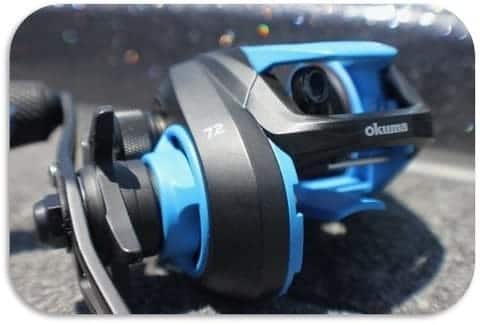
Next up, we have the low-profile baitcast reel. These reels have, as the name indicates, a compact design. They are fitted at the top of the rod, and like spinning reels, give a centered and symmetrical grip.The difference in the working of low profile baitcast reels and the spinning reels pertains to the spool. In the latter, the spool remains fixed and stationary while the line unwinds and goes flying out. In the former, however, the spool also rotates.
Since the spool also moves when dispatching the line, these baitcast reels require a higher level of skill as compared to spinning reels. If the line goes out way too fast, or if it gets messed up during the wind-up, you can end up with what is called a ‘bird’s nest’.
(The term ‘bird’s nest’ refers to an almost unrepairable/undoable tangled mess of the fishing line.)Conventional Reel

Image taken from Pennfishing.com
There is something that should be cleared up before we move on with this type. Conventional reels are the same as ‘baitcasters’. The one we discussed above was put under a separate heading due to the fact that it was ‘low profile’ and not a standard one.Conventional reels are also fitted on the top of the rod, and they have the same ‘dynamic spool’ mechanism that we saw above. The spool does not remain static when the line is being let off. Rather, it rotates simultaneously with the unwinding motion.
These types of reels also come with a 'level wind'. The level wind is a part inside the reel that moves side to side when the line is being pulled in. It distributes the line equally on the spool. Conventional reels are durable and sturdy and are used with heavy rods.
Fly Fishing Reel
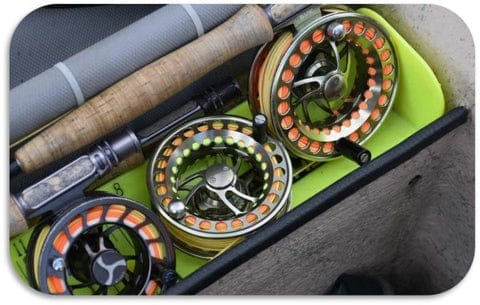
Image taken from Guiderecommended.com
The fly fishing reels are, in comparison to the other types, very simple and straightforward. They are bereft of the complicated gimmicks and mechanisms found in the others. For beginners, these reels are an excellent way to get started.Fly fishing reels are, like spinning reels, fitted at the bottom of the rod. There are three arbor sizes that you can choose from when buying a fly fishing reel. In the picture above, the one on the extreme right is a large arbor, and as you can see, it’s quite bulky in size.
These two knobs on the outside of the reel include the spool release and the drag adjustment. By adjusting the drag, the angler basically sets the amount of resistance that the fish will experience when tugging at the line.
Electric Reel
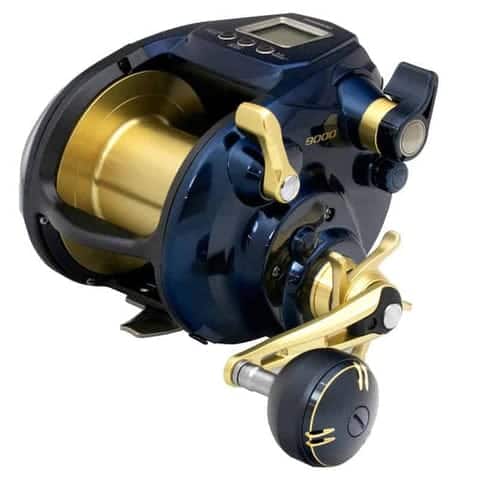
Image taken from PecheXtreme.com
While fly fishing reels are fully manual and hand-operated, electric reels work using an automatic system. Using an electric reel isn’t very easy for beginners due to the multifarious functions and the complicated working.
Electric reels are essentially meant for those anglers who have to earn a living catching fish. After spending a couple of hours on the water while casting, winding, and struggling, the angler can get exhausted. Electric reels are a solution for all that manual effort.
The motor in these reels pulls in the line with mechanical strength and precision. This saves the angler from the draining amount of physical exertion.
Comparison
Now that we have looked at the different types of reels available, let’s cover the pros and cons of each. This is will help you gain a decisive impression, and make a definite choice about buying one.
Spinning Reel
Pros
- Spinning reels are relatively easy and simple to use. They are great for beginners. If you don’t have a lot of experience in fishing, you should start off with a spinning reel or a spincast reel.
- They are fitted at the bottom of the rod. This position gives a nice and natural grip while also keeping the rod balanced and symmetrical.
- They are affordable. Spinning reels won't make a large hole in your wallet but at the same time, they are quite efficient for catching small to medium-sized fish.
Cons
- Spinning reels are not as straightforward as spincast reels. The bail has to be manually managed when casting and recalling the line. This is something that requires a bit of getting used to.
- These reels, while good for small to medium-sized fish, are not suitable for larger ones.
Low Profile Baitcast Reel
Pros
- These reels have a small and compact design. They sit discreetly on the rod and don’t mess a lot with the overall balance.
- Like spinning reels, they have a centered position on the rod albeit on top rather than at the bottom.
- Baitcast reels in general are strong and sturdy. They can be used to catch large fish.
Cons
- Baitcast reels are not very beginner-friendly. Operating them requires skill and expertise.
Conventional Reel
Pros
- Conventional reels usually come with a ‘level wind’. This part helps in evenly accumulating the line when it is recalled.
- These reels are strong and durable. Combined with heavy rods, they are ideal for catching large fish.
- They also come with a moving spool that gives a faster line deployment.
Cons
- Like low-profile baitcast reels, conventional reels need some getting used to. You will need to up your skill a little before switching to a conventional reel.
Fly Fishing Reel
Pros
- Very simple to use. In my opinion, these are the most straightforward reels that you can opt for. To cast the line, all you need to do is pull it out by hand. To recall it, just wind the arbor using the knob on the side.
- There are different arbor sizes that you can choose from. This availability can help you find the right size for your rod. You will, in this way, find your ideal balance and weight.
- They come with an easy drag adjustment mechanism.
Cons
- These rods require more manual effort than the others.
Electric Reel
Pros
- Electric reels save the angler from the effort of winding the line back in. At the press of a button, the motor takes over and recovers the line while you just have to stand and hold the rod.
Cons
- These reels will come with the precautions that are generally attached to electronics. They will also require batteries (or charge) to operate.
If you are a beginner, you will be best off with a spinning reel or a fly fishing reel. If, on the other hand, you are someone looking to catch some big fish, you can try out baitcast or conventional reels.
And there you have it, folks. These were some of the fishing reels that you can find in the market nowadays. Hopefully, after reading the pros and cons, you will have a better idea about which one to buy for your particular need and requirement.


